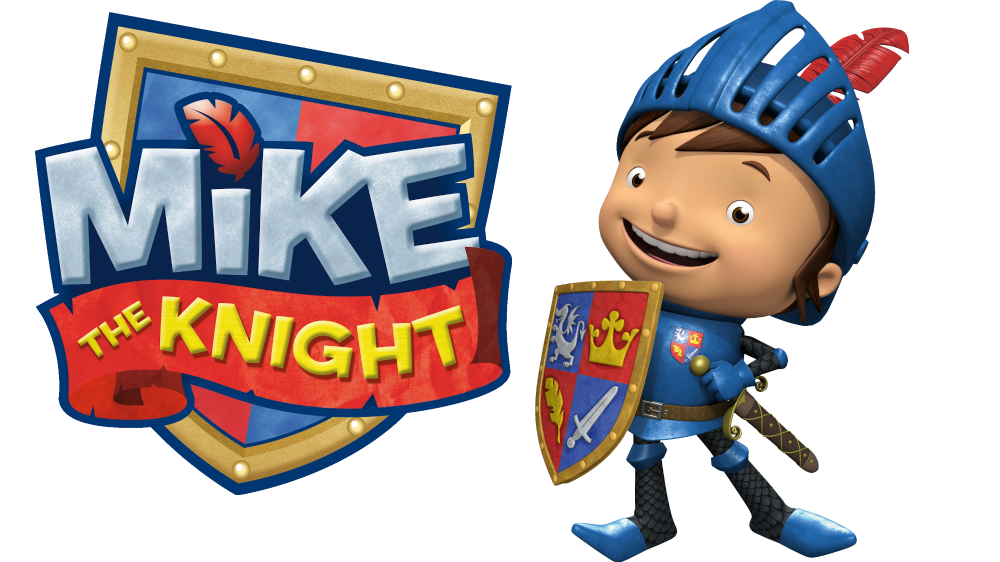
My kids were watching TV the other day.  Perhaps a purist would say that watching TV is not ideal for children and that they ought to be out climbing trees or reading Hamlet or something, but hey, I have three small children, an increasingly pregnant wife, and we all live in Pakistan, so watching twenty minutes of TV every day doesn’t seem too outrageous.  The current programme of choice for my offspring is Mike the Knight, a show in which a young knight living in a sanitised medieval world (no Black Death, no Crusades, but plenty of cheery blacksmiths and friendly dragons) has adventures.
mike-the-knight-51a926fb76f8f

Then it struck me: we never see his father.

He sends postcards occasionally, which his son eagerly reads, but the father is never actually seen.  This struck me as odd.  I started to think about other shows which my kids have enjoyed and I started to realise that fathers are conspicuously absent in quite a few of them.

There’s Timmy Time, an animation where a cute lamb goes to playschool with his similarly adorable animal friends.  His mother waves him off from the gate every morning, but of his father there is no sign.

Then there’s the Octonauts, possibly the best kid’s programme of all time if you ask me.  One of the characters, Peso, is a penguin who is occasionally visited by his brother and mother – but not his father.

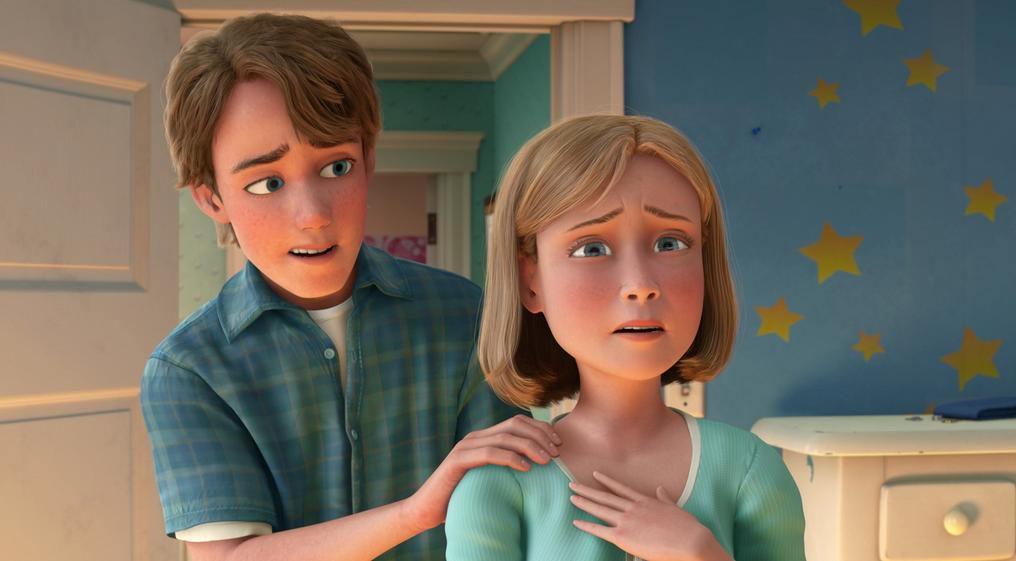
Then there’s the Pixar film Up: no dad there either, and the boy scout character mentions this fact sadly.  Or take the film trilogy Toy Story: Andy’s sister features, his mother is a major character, but we never see his father.  He’s not even mentioned once.
andy-and-his-mother-toy-story-3-30395995-1016-561

Why are fathers absent from so many programmes?  Are the programme-makers trying to reflect real life?  After all, a 2013 report from the UK stated that a million British children are growing up without a father around.  In the US the numbers are even more appalling: 24 million children growing up without a father figure – that’s one child in every three.  One in three!  That is a staggering statistic.

Or perhaps the programme makers are paying tribute to single mums who raise kids on their own.  If this is the case then I applaud them: anyone who has managed a household of kids on their own knows just how difficult it is, and frankly mums who do it regularly require infinite amounts of praise.

Or perhaps, most heartbreakingly, the script writers don’t even realise what they’re doing.  Perhaps fathers are so regularly absent these days that the currency of fatherhood has been devalued to the point at which their absence is not even noteworthy.

One of the blessings of our life in Pakistan is that I get to be around my kids far more than most of my peers back in the UK.  It’s a rare day when I’m not around for both breakfast and dinner.  I can count on the fingers of one hand the times when I haven’t been able to put the kids to bed.  So perhaps I feel this more keenly than most.  But it still makes me wonder what kind of example today’s fathers are setting to their own children…

A new metro bus service recently opened in Rawalpindi and Islamabad.  This deeply impressive, stunningly efficient service is really something remarkable and I will write about it at a later date.  What I want to write about today, however, is how the authorities responsible for its construction go about claiming the credit for it.

Islamabad-Rawalpindi-Metro-Bus-Project

On the day of its inauguration massive posters were plastered over every single one of its 20 or so stations.  These posters bore the faces of Nawaz Sharif, the Prime Minister of Pakistan, and of Shahbaz Sharif, his brother, who is the chief minister of the Punjab.  At every single stop commuters were reminded of precisely who built the metro bus, and to whom the credit should go.

This habit of loudly claiming credit for acts of civic generosity is not uncommon in Pakistan.  Our kids enjoy going to a large park near our house.  Outside its main gate is an immense rock with the names of the people responsible for its construction carved into its monolithic face.  Another park in Rawalpindi is called “Nawaz Sharif Park”, just in case you weren’t sure whom to thank.  Hospitals and charitable institutions frequently bear the names of the people who founded them: the Shaukat Khanum cancer hospitals, the Begum Samina Khan Welfare Trust, and so on and so forth.  Any form of charitable activity is loudly and brazenly flaunted to ensure that its beneficiaries are fully cognizant of the generosity of those responsible.

It may seem churlish to complain about this.  After all, there is plenty of need in Pakistan, so surely any effort to tackle the immense inequality in Pakistani society is to be praised, right?  And of course this phenomenon is by no means limited to Pakistan.  Hospitals in the West are frequently labelled with the names of the donors who made their construction possible.  I heard of a church which organised a giving day to raise funds for some project or other, and loudly and publicly proclaimed the names of those who had given the most.  Friends of ours who organise charitable events and ask for sponsorship have lists of people who have donated.  There is an option to make one’s donation anonymous, but nobody ever does.

Jesus, on the other hand, told his followers to give so secretly that even their left hand didn’t know what the right hand was doing.  The correct model, he said, was a widow donating a tiny amount in secret, rather than braggarts donating as lavishly and as ostentatiously as possible.  The point is this: what are the intentions of the giver?  Are they honestly aiming to effect a radical redistribution of wealth in order to improve global equality, or are they trying to buy themselves some credit?  If their goals are merely selfish then it devalues the whole exercise, making a noble act somewhat seedy.

As someone whose livelihood depends entirely on the charitable giving of others, this affects me profoundly.  I’ll be thinking about this topic more and more as I travel on our beautiful new metro buses…

45544518

Summer in Pakistan is hot.  Also, the Pope is a Catholic.

Pretty obvious, I know.  Yet the heat and the sheer fierceness of the sun when it beats down on Pakistan comes as a surprise to anyone who grew up in the UK.  Over there the sun manages, somehow, to seem rather weak and puny – in the words of Douglas Adams, “Several billion trillion tons of superhot exploding hydrogen nuclei rose slowly above the horizon and managed to look small, cold and slightly damp”.  In Pakistan, those same tons of superhot exploding hydrogen nuclei look like, well, like several billion trillion tons of superhot exploding hydrogen nuclei.  You walk out of your house in May and the sun hits you – physically assaults you – on the head like a mugger waiting outside your gate with a truncheon in his hand.

This has a number of unexpected effects.  I frequently leave my sunglasses on the dashboard when I park the car, only to burn myself, often quite seriously, on the bridge of the nose when I come to put them on again.  Seatbelts are so hot they burn my kids (so we sometimes do without them; everyone else does anyway).

And then there are swings.

We take our kids swimming pretty regularly during the summer months.  Last week one of them hopped out of the pool and ran over to the small playground nearby.  She jumped onto the swings with an expression of glee.  This expression rapidly changed into one of surprise, then one of anguish.  A sizzling sound, such as you get when you chuck a couple of sausages into a hot frying pan, arose.  With a yelp she leaped up again, sprinted back to the pool, and jumped in, whereupon clouds of steam arose from her scorched thighs.  I checked to see what had happened and realised that the seat of the swing – constructed, with a palpable lack of foresight, out of metal – was hot enough to fry an egg.  Same for the see-saw.  Anyone wanting to rustle up a quick breakfast could have saved the bother of purchasing a frying pan and simply cracked an egg on the top of the slide; by the time it reached the bottom it would have been nicely cooked.

Goodness knows how we’ll cope if we ever return to the UK.

10

It’s summer in Pakistan.  This is a time of the year that most people dread, for the simple and entirely predictable reason that It’s Very Hot.  The temperatures in our city don’t go much above 42 Celsius but further south it’s more like 45, and sometimes over 50 Celsius if you live in Multan or Sibi.  That is hot, especially for someone like me from England, where anything over 20 Celsius is considered hot and anything over 30 is usually sufficient to melt roads, stop trains, and cause everyone to moan.

Summer has one advantage, though: fruit.

You just can’t believe how good Pakistani fruit is.  Really, you can’t.  Comparing Pakistani fruit to the kind of fruit you buy in a Western supermarket is like comparing Monet’s paintings to the crayon scrawls of my one year old daughter.  My personal favourite are the peaches – but cherries could also be considered, and mangoes, and apricots, and I’d better stop here lest this blog turn into a shopping list.

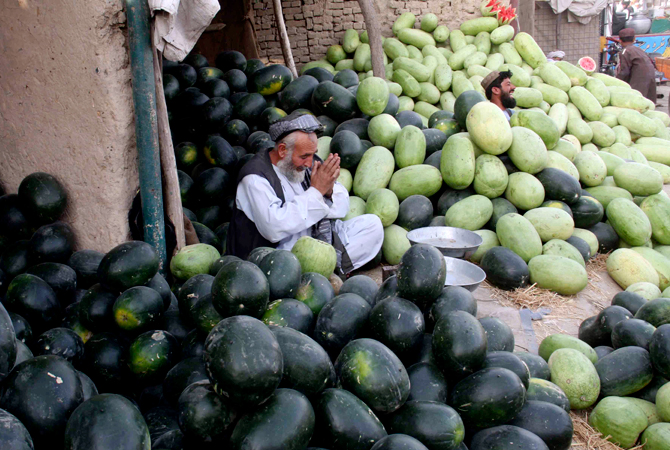
Watermelons are good too.  People here seem to go crazy for them.  Fruit-sellers in the bazaar are usually a restrained bunch, but once the watermelons arrive they walk around shouting “Watermelons!  Fresh from the field!” and even grab your arm to convince you to buy one, as one did to me this Tuesday.

How they make any money from them is a mystery to me.  Currently they’re selling for 25 rupees a kilo, which means that a decent-sized melon of 3kg can be had for 50p.  Entire trucks filled with nothing but watermelons, dark-green globules of deliciousness, cross Pakistan from top to bottom, loaded down with a commodity with a retail price of 15p a kilo.

To put that in perspective, a litre of milk (roughly 1kg) sells for 115 rupees.  A kilo of flour costs 40 rupees.  A litre of oil is probably 80 rupees.  A kilo of lentils costs 120 rupees.  Watermelons are worth less than half of the cheapest comestible I can think of.  And that final selling price of 25 rupees a kilo is the final stage of the supply line: in order to get the watermelon from the field to the bazaar involves buying seeds, watering the plants, paying someone to harvest them, paying someone else to load them onto a truck, paying the truck driver, paying for fuel for the truck, and paying someone else to unload them – and then the salesman in the bazaar will want his cut as well to make it worth his while.

So what’s my point?  Simply this: poverty is cruel.  If any of the people in the supply line were earning anything close to a living wage, enabling them to educate their kids and buy medicine and live in a decent home and eat well and save for the future, the price of watermelons – the price of everything – would be higher.  Much higher.  But since so many people in Pakistan live perilously close to the poverty line, desperate for any kind of work that will keep the wolf from the door, they can’t afford to ask for better wages.  If they did, someone else, equally desperate, would take their job.

It’s a sad realisation that poverty actually benefits me personally.

PAKISTAN-CHINA-XI JINPING-ARRIVAL

Pakistani newspapers as well as foreign media outlets have been all agog recently with the news of investment promised by the Chinese President on his recent visit to Islamabad.  A total of $46 billion has been pledged by the Chinese as they look to build a trade corridor from western China down the Karakoram Highway, through Pakistan, and to the port of Gwadar on the coast.  To put that figure into context, it is three times larger than the total sum of foreign aid received by Pakistan over the last decade.  It is, to use the appropriate economic term, An Awful Lot Of Money.

The list of proposed projects is immense: expanding the Karakoram Highway, the road that leads through the northern mountains to the Chinese border; building the world’s largest solar power plant; expanding roads all the way through Pakistan; building a railway to China (which, as it happens, would pass through some of the most inhospitable terrain on the planet); and adding enough megawatts to Pakistan’s power capacity to remove the power cuts that plague Pakistan.  Frankly, if even half of these projects come to fruition Pakistan’s infrastructure will be completely changed.

28

Your correspondent sincerely hopes that this will come to pass.  Yet it’s also worth pausing to consider something that has occupied my mind over the last few weeks: why is it that major infrastructure projects in Pakistan only happen with foreign investment?

Think about it.  The Grand Trunk Road, the epic road that crosses the subcontinent linking Kabul with Bangladesh, was built by Sher Shah Suri, an Afghan.

Pakistan’s railway network was built by the British (and hasn’t been significantly upgraded since).

Pakistan’s excellent motorways were built by the Koreans.

The Karakoram Highway was initiated and built by the Chinese.

This new project, of unprecedented scale, falls into this category too.  History tells us that Pakistani infrastructure projects on any significant scale only happen when foreigners stump up the money and come up with the idea.

The reason for this goes right back to one of the main challenges faced by Pakistan: as a country, it is too divided.  Pakistan is diverse in every conceivable way: geographically, culturally, linguistically, religiously, you name it.  An Ismaili from Hunza has little, if anything, in common with a Deobandi from Multan or a Shi’a Hazara from Quetta.  A significant chunk of the Pakistani population tends to be more concerned with their own personal networks than with any broader notions of national identity.  Pakistan is, in some ways, rather artificial: a 70 year old construct slapped down onto a land that dates back thousands and thousands of years.  The religious, social, cultural and historical currents that ebb and flow through this land are far, far older than any idea of Pakistani national identity.

The idea of creating any national-scale infrastructure projects requires people to think far beyond their own personal networks, to envision a nation for nearly two hundred million people.  The mental shift required to make this happen (and to consider other elements of statehood such as paying taxes) has not really taken place in any meaningful way.  Perhaps that’s not surprising: Pakistan is not yet 70 years old, and 70 years, in this part of the world, is really not a long time at all.

It may yet happen, and we hope that it will, to create a nation that exists to benefit all of its citizens.

Until then, come, China!  You are most welcome.

A high-quality indigenous literary scene of genuine merit is one of those things that you don’t necessarily expect to find in Pakistan.  In this respect it fits into a category containing other surprising aspects of life here, such as “Friendly People”, “Stunning Landscapes”, and “The Best Fruit In The World”, and just goes to show that you shouldn’t believe everything that you read in the media.

The list of Pakistani authors who have reached global acclaim in the last few years is getting longer by the day.  Rather than list all of them, it would probably be a better use of our time if I listed some of the books by Pakistani authors which have made a significant impact on me.  All of them are set, at least partly, in Pakistan.  Some are by men and some by women.  Most are fiction; one is not.  Yet all of them provide genuine insight into Pakistani life in all of its complexity.

So without further ado, here is my list of Books By Pakistani Authors That Are Surprisingly Excellent:

Mohsin Hamid, “The Reluctant Fundamentalist”.

hamid

A short but powerful story of a chance meeting at a restaurant in Lahore, with a sinister twist in the tale.  This book explores themes such as honour and shame, the emotions felt by expatriate Pakistanis in the USA, 9/11, and also contains a love story of genuine power.

Mohsin Hamid, “How To Get Filthy Rich In Rising Asia”.

A self-described self-help novel which is both genuinely hilarious and incisive, also containing a love story which moved me more than anything since “Love in the time of Cholera” by Garcia Marquez.

Mohammed Hanif, “A Case of Exploding Mangoes”.

Perhaps one of the best examples of black humour in recent years, this fictional account of President Zia-ul-Haq’s last days is darkly hilarious.

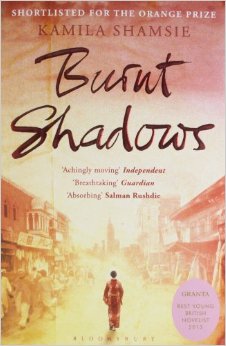
Kamila Shamsie, “Burnt Shadows”.

51hNdTsyLNL._SY344_BO1,204,203,200_

This novel completely astonished me.  Shamsie’s narrative goes from the atomic attack on Nagasaki in 1945 to the end of the Raj to modern Karachi and ends up in Guantánamo Bay.  How she manages to fit all of this in and yet make it a compelling and believable story is a testament to her skill as a story-teller.  It’s utterly beautiful.

Kamila Shamsie, “Offence: The Muslim Case”.

This tiny little book contains the best analysis of the current tensions between East and West, including the War on Terror and its implications for Pakistan.  It’s a work of non-fiction and seems not to have attracted much attention, despite the fact that it sheds more light on contemporary Pakistan than anything else I’ve ever read.

There are lots more out there, but this reading list will give you a good beginning.  Of course, if you want to know more, you could always come to the annual Lahore Literary Festival with me…

heathrow-airport-london

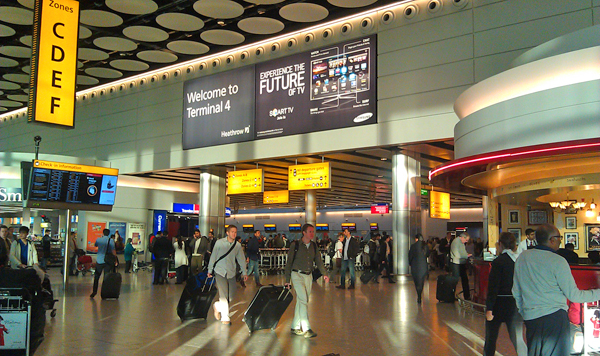
I’ve always enjoyed airports.  The idea of travelling has always appealed to me; I grew up in a small island and the thought of breaking clear of the boundaries of the English Channel and finding new land, new cultures, new languages, has not yet stopped being exciting.  I remember looking up at the departures board as a child and being thrilled by the thought of the exotic places named on it: Muscat, Mumbai, Brunei; the entire world only a few hours away.

In airports all of the world’s cultures, religions and languages are compressed and mingled together: Indian Sikhs flying to Delhi rub shoulders with bleary-eyed businessmen coming from Chicago; Pakistanis with prayer caps and long beards politely hold the lift doors open for African families dashing to make their flight to Freetown or Abidjan.  Nobody says much – the British reserve really does rub off on anyone who comes through here – so instead everyone goes about their business quietly, privately, peacefully.

Airports are great levellers.  Everyone has to go through check-in; everyone has to go through security; everyone stands around and looks up at the monitors to see where their aeroplane is waiting.  People from wildly varying backgrounds, with wildly varying levels of wealth and wildly varied lives, are rendered temporarily equal by the mundane modern realities of catching a flight: belt off please sir, can I see your boarding pass madam, do you have any liquids in your bag?  Even the rich and mighty must bow before contemporary society’s demand for unimpeachable security.

I find myself talking to a British marine biologist who has just arrived from Sydney and looks utterly befuddled, peering around him with weary eyes, unsure of the time zone he finds himself in.  Then he says goodbye and makes his way off to a flight somewhere else.  A Congolese charity worker sits down and we chat in French.  He, too, looks exhausted, being halfway through a trip from the Congo to Paris for a conference on street children.  He talks wearily about his work.  When I ask if he has children a smile breaks across his weary face. Yes, he has three.  He is proud of them.  Then he, too, says goodbye and makes his way to his hotel.

Today’s world seems to be supremely characterised by division: between religions, between races, between rich and poor, between old and young, between wealthy Europeans and the dozens of desperate migrants who risk, and often lose, their lives in an attempt to cross the Mediterranean barriers of opportunity.  Yet here, in the anonymity of a modern airport, the divisions are temporarily levelled.  The marine biologist, the charity worker, the businessman – all are rendered briefly equal.  As Pakistanis say, “hum sub insan hain” – we are all people.  And all the people go about their life’s journey, as we always do, and as we must.

Dead-crow

The church service finished and all of the children spilled out into the garden.  Green spaces are hard to come by in Pakistani cities these days; the old houses with large gardens are being knocked down one by one and two or three houses built on the plot, meaning more rent income for the landlord but, inevitably, the concreting-over of the garden. The garden at church – a wide lawn fringed with fruit trees – is therefore a place of wonder for our kids.  Last week they found a bird’s nest in a conifer and were enthralled by the complexity of its design.

This week they found a dead crow.  While the parents stood around drinking coffee and catching up with friends our children were huddled around its glossy black corpse, poking it with sticks, torn between fascination and revulsion.  My son ran in to find me and, dragging me by the hand, brought me over to have a look.

It was pristine, impeccably black, perfectly unharmed, as if life had simply fled mid-flight.  Or perhaps it had flown into a window and broken its neck?  One way or another its existence had abruptly stopped and now it lay on the grass as though sleeping, while a huddle of children gaped and poked and shrieked and wondered.  One boy flipped it over with a leaf to look underneath.  My son cried out in anguish.

“Don’t do that!  Don’t hurt its wing!” he said.

“Why?” said the other boy.  “It’s dead; it won’t feel it”.

My son looked down at the dead crow, so perfect and yet so lifeless, and his eyes lit up with the staggering possibility of reincarnation.

“But when it gets to heaven, it will be able to fly again”.

christians-in-pakistan-youhanabad

Youhanabad means “City of John”.  I have visited it a number of times over the last few years; it is probably the biggest Christian population centre in the whole of Pakistan.  The level of Christian dominance seems strange.  Shops and pharmacies are usually given Islamic names – “Mashallah Pharmacy”, “Bismillah Cold Drinks”, that kind of thing – but when I was walking through the packed streets of Youhanabad a few years ago I noticed a shop with “Jesus Christ Pharmacy” written in large type over its door.

“Isn’t this strange?” I asked the owner when I went in to buy some Calpol for a sick child.

“Why?” he replied.  “Everyone here is a Christian”.

This explains why, on Sunday 15th March, two suicide bombers decided to attack it.  They approached the gates of two churches – one Catholic, one Protestant – and detonated their devices.  17 people are dead.  Far more would have died, except that security guards wrestled with the attackers and prevented them from entering the compound; in doing so they gave their lives for the protection of those within, thereby providing an illustration, in the city of John, of the words of Jesus in the gospel of John: “Greater love has no man than this, than to lay down his life for his friends”.

Christian anger spilled over into the streets as Christian blood spilled over into the gutters.  A mob formed, and two passers-by, wrongly accused of being part of the terrorist team, were lynched, and their bodies burned.  Cars were smashed, rocks thrown, roads and motorways blocked as hate spilled out into the streets.  In doing so the protestors in the city of John failed to heed the words of the apostle John: “Whoever loves his brother abides in the light…but whoever hates his brother is in the darkness and walks in the darkness”.

The protests will fade away; they always do.  The politicians will make speeches; they always do.  The grieving Christians will continue with life; they always do.  The words of Jesus in the gospel of John will continue to be true – true for the Christians, even those who mobbed innocent men to death; true for the terrorists, even those who consider Christians mere fodder for their suicide vests; true for everyone who tramps the dusty streets of the city of John:

“For God so loved the world that he gave his only son, that whoever believes in him should not perish but have eternal life”.

praying

In Pakistan the backs of houses are usually where laundry is done.  Guests would be invited into the front rooms, which are decorated and furnished to honour those visiting the family, while menial tasks such as cooking and washing are done at the back.  The rear of our house backs onto the rear of the houses on the street above ours, and so it is that when I go out to put in laundry or check to see if the hot-water boiler is still functioning I inevitably encounter our neighbours.  Their balcony is where they, too, do their laundry, hang their clothes, or come out to lie on a charpai (traditional bed) to warm themselves in the sun.  I try not to linger; the rear of the house is normally the place where women come to relax, and I don’t want to make them feel uncomfortable by intruding on their private space.

Our bedroom is also at the back of our house, meaning that our bedroom windows looks out over their balcony as well.  Every morning and evening while tackling the stream of emails that ping into my inbox I look out to the our neighbours come out to pray.  They take down their prayer mat, orient it towards Mecca, and kneel down to go about their prayers.  They close their eyes, their lips moving in silent piety, they bow down, they look left and right, and they go through the simple routine just as millions of Muslims do several times a day, in Pakistan and around the Muslim world.  Their prayer routine is simple, undemonstrative, calm, elegant, and peaceful.

Islam has come under intense scrutiny in recent years.  The actions carried out by a tiny minority of Muslims have resulted in every single Muslim in the world being viewed with suspicion, as if 1.2 billion Muslims are somehow responsible for the violent fanaticism of a few thousand.  No matter that this is blatantly illogical and deeply unfair; no matter that this is akin to considering all Indians culpable for the actions of a handful of rapists or blaming every single Chinese person for the corruption of a few Party officials – this is how the world seems when you absorb the crass and foolish generalisations of the media.  Islam, it seems, stands accused of having a problem.

Except for the overwhelming majority of Muslim people, that is.  After living in Pakistan for four years normal Islam seems, to me, pretty normal.  Quiet, pious, polite, undemonstrative, peaceful.  Confident, yet humble.  These are the characteristics of Muslim people as I have come to know them after living amongst them for four years.  It is a long, long way from the violence and intolerance flaunted around the tabloids of the Western world.

I go out to get the laundry out of the washing machine and my neighbour looks up from his chair where he is sitting to read the newspaper.

“Salaam aleikum!” he calls cheerfully.  “Peace be upon you!”.

And upon you too, friend.

Design a site like this with WordPress.com
Get started