Archive

Pakistan

PAKISTAN-CHINA-XI JINPING-ARRIVAL

Pakistani newspapers as well as foreign media outlets have been all agog recently with the news of investment promised by the Chinese President on his recent visit to Islamabad.  A total of $46 billion has been pledged by the Chinese as they look to build a trade corridor from western China down the Karakoram Highway, through Pakistan, and to the port of Gwadar on the coast.  To put that figure into context, it is three times larger than the total sum of foreign aid received by Pakistan over the last decade.  It is, to use the appropriate economic term, An Awful Lot Of Money.

The list of proposed projects is immense: expanding the Karakoram Highway, the road that leads through the northern mountains to the Chinese border; building the world’s largest solar power plant; expanding roads all the way through Pakistan; building a railway to China (which, as it happens, would pass through some of the most inhospitable terrain on the planet); and adding enough megawatts to Pakistan’s power capacity to remove the power cuts that plague Pakistan.  Frankly, if even half of these projects come to fruition Pakistan’s infrastructure will be completely changed.

28

Your correspondent sincerely hopes that this will come to pass.  Yet it’s also worth pausing to consider something that has occupied my mind over the last few weeks: why is it that major infrastructure projects in Pakistan only happen with foreign investment?

Think about it.  The Grand Trunk Road, the epic road that crosses the subcontinent linking Kabul with Bangladesh, was built by Sher Shah Suri, an Afghan.

Pakistan’s railway network was built by the British (and hasn’t been significantly upgraded since).

Pakistan’s excellent motorways were built by the Koreans.

The Karakoram Highway was initiated and built by the Chinese.

This new project, of unprecedented scale, falls into this category too.  History tells us that Pakistani infrastructure projects on any significant scale only happen when foreigners stump up the money and come up with the idea.

The reason for this goes right back to one of the main challenges faced by Pakistan: as a country, it is too divided.  Pakistan is diverse in every conceivable way: geographically, culturally, linguistically, religiously, you name it.  An Ismaili from Hunza has little, if anything, in common with a Deobandi from Multan or a Shi’a Hazara from Quetta.  A significant chunk of the Pakistani population tends to be more concerned with their own personal networks than with any broader notions of national identity.  Pakistan is, in some ways, rather artificial: a 70 year old construct slapped down onto a land that dates back thousands and thousands of years.  The religious, social, cultural and historical currents that ebb and flow through this land are far, far older than any idea of Pakistani national identity.

The idea of creating any national-scale infrastructure projects requires people to think far beyond their own personal networks, to envision a nation for nearly two hundred million people.  The mental shift required to make this happen (and to consider other elements of statehood such as paying taxes) has not really taken place in any meaningful way.  Perhaps that’s not surprising: Pakistan is not yet 70 years old, and 70 years, in this part of the world, is really not a long time at all.

It may yet happen, and we hope that it will, to create a nation that exists to benefit all of its citizens.

Until then, come, China!  You are most welcome.

A high-quality indigenous literary scene of genuine merit is one of those things that you don’t necessarily expect to find in Pakistan.  In this respect it fits into a category containing other surprising aspects of life here, such as “Friendly People”, “Stunning Landscapes”, and “The Best Fruit In The World”, and just goes to show that you shouldn’t believe everything that you read in the media.

The list of Pakistani authors who have reached global acclaim in the last few years is getting longer by the day.  Rather than list all of them, it would probably be a better use of our time if I listed some of the books by Pakistani authors which have made a significant impact on me.  All of them are set, at least partly, in Pakistan.  Some are by men and some by women.  Most are fiction; one is not.  Yet all of them provide genuine insight into Pakistani life in all of its complexity.

So without further ado, here is my list of Books By Pakistani Authors That Are Surprisingly Excellent:

Mohsin Hamid, “The Reluctant Fundamentalist”.

hamid

A short but powerful story of a chance meeting at a restaurant in Lahore, with a sinister twist in the tale.  This book explores themes such as honour and shame, the emotions felt by expatriate Pakistanis in the USA, 9/11, and also contains a love story of genuine power.

Mohsin Hamid, “How To Get Filthy Rich In Rising Asia”.

A self-described self-help novel which is both genuinely hilarious and incisive, also containing a love story which moved me more than anything since “Love in the time of Cholera” by Garcia Marquez.

Mohammed Hanif, “A Case of Exploding Mangoes”.

Perhaps one of the best examples of black humour in recent years, this fictional account of President Zia-ul-Haq’s last days is darkly hilarious.

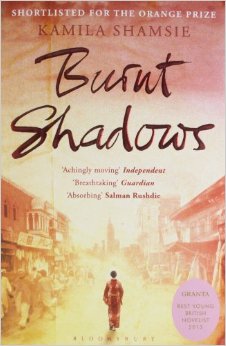
Kamila Shamsie, “Burnt Shadows”.

51hNdTsyLNL._SY344_BO1,204,203,200_

This novel completely astonished me.  Shamsie’s narrative goes from the atomic attack on Nagasaki in 1945 to the end of the Raj to modern Karachi and ends up in Guantánamo Bay.  How she manages to fit all of this in and yet make it a compelling and believable story is a testament to her skill as a story-teller.  It’s utterly beautiful.

Kamila Shamsie, “Offence: The Muslim Case”.

This tiny little book contains the best analysis of the current tensions between East and West, including the War on Terror and its implications for Pakistan.  It’s a work of non-fiction and seems not to have attracted much attention, despite the fact that it sheds more light on contemporary Pakistan than anything else I’ve ever read.

There are lots more out there, but this reading list will give you a good beginning.  Of course, if you want to know more, you could always come to the annual Lahore Literary Festival with me…

Dead-crow

The church service finished and all of the children spilled out into the garden.  Green spaces are hard to come by in Pakistani cities these days; the old houses with large gardens are being knocked down one by one and two or three houses built on the plot, meaning more rent income for the landlord but, inevitably, the concreting-over of the garden. The garden at church – a wide lawn fringed with fruit trees – is therefore a place of wonder for our kids.  Last week they found a bird’s nest in a conifer and were enthralled by the complexity of its design.

This week they found a dead crow.  While the parents stood around drinking coffee and catching up with friends our children were huddled around its glossy black corpse, poking it with sticks, torn between fascination and revulsion.  My son ran in to find me and, dragging me by the hand, brought me over to have a look.

It was pristine, impeccably black, perfectly unharmed, as if life had simply fled mid-flight.  Or perhaps it had flown into a window and broken its neck?  One way or another its existence had abruptly stopped and now it lay on the grass as though sleeping, while a huddle of children gaped and poked and shrieked and wondered.  One boy flipped it over with a leaf to look underneath.  My son cried out in anguish.

“Don’t do that!  Don’t hurt its wing!” he said.

“Why?” said the other boy.  “It’s dead; it won’t feel it”.

My son looked down at the dead crow, so perfect and yet so lifeless, and his eyes lit up with the staggering possibility of reincarnation.

“But when it gets to heaven, it will be able to fly again”.

praying

In Pakistan the backs of houses are usually where laundry is done.  Guests would be invited into the front rooms, which are decorated and furnished to honour those visiting the family, while menial tasks such as cooking and washing are done at the back.  The rear of our house backs onto the rear of the houses on the street above ours, and so it is that when I go out to put in laundry or check to see if the hot-water boiler is still functioning I inevitably encounter our neighbours.  Their balcony is where they, too, do their laundry, hang their clothes, or come out to lie on a charpai (traditional bed) to warm themselves in the sun.  I try not to linger; the rear of the house is normally the place where women come to relax, and I don’t want to make them feel uncomfortable by intruding on their private space.

Our bedroom is also at the back of our house, meaning that our bedroom windows looks out over their balcony as well.  Every morning and evening while tackling the stream of emails that ping into my inbox I look out to the our neighbours come out to pray.  They take down their prayer mat, orient it towards Mecca, and kneel down to go about their prayers.  They close their eyes, their lips moving in silent piety, they bow down, they look left and right, and they go through the simple routine just as millions of Muslims do several times a day, in Pakistan and around the Muslim world.  Their prayer routine is simple, undemonstrative, calm, elegant, and peaceful.

Islam has come under intense scrutiny in recent years.  The actions carried out by a tiny minority of Muslims have resulted in every single Muslim in the world being viewed with suspicion, as if 1.2 billion Muslims are somehow responsible for the violent fanaticism of a few thousand.  No matter that this is blatantly illogical and deeply unfair; no matter that this is akin to considering all Indians culpable for the actions of a handful of rapists or blaming every single Chinese person for the corruption of a few Party officials – this is how the world seems when you absorb the crass and foolish generalisations of the media.  Islam, it seems, stands accused of having a problem.

Except for the overwhelming majority of Muslim people, that is.  After living in Pakistan for four years normal Islam seems, to me, pretty normal.  Quiet, pious, polite, undemonstrative, peaceful.  Confident, yet humble.  These are the characteristics of Muslim people as I have come to know them after living amongst them for four years.  It is a long, long way from the violence and intolerance flaunted around the tabloids of the Western world.

I go out to get the laundry out of the washing machine and my neighbour looks up from his chair where he is sitting to read the newspaper.

“Salaam aleikum!” he calls cheerfully.  “Peace be upon you!”.

And upon you too, friend.

¹Ø×¢Æ¶À§´óÈü¡ª¡ªlt

Whenever I need a reason to love Pakistan, and these days I often do, I go to get something fixed on the car.

This might sound odd.  Coming from the UK, as I do, mechanics are people to be avoided as much as possible, because they are so expensive.  The hourly rate they charge for labour means that even the smallest job is going to set you back a bare minimum of £50, and if your car’s problem is in any way serious, you will pay a lot.  A LOT.

This is not the case in Pakistan.  Labour here is cheap – a consequence of high unemployment and low literacy, which together result in a large pool of unskilled labour.  This is sad, but it does mean that car repairs are cheap too.  Once I needed to have the head gasket on our car fixed, a job which cost me £400 when I had it done in the UK.  In Pakistan the same job cost £15 – and even then the mechanic winced, blew out his cheeks, and sighed deeply when he informed me of how serious the problem was.  I tried to act sad, but inside I was rejoicing.

When I show up at the mechanic’s shop he welcomes me with open arms, invites me to sit, and orders tea.  For a few minutes we sit and drink and chat, catching up on what’s happened since I was last in, and eventually we come round to the reason for my visit.  I explain as best I can, he nods wisely, and he instructs one of his juniors to open the bonnet and start pulling things out.

Everything that is good about Pakistan can be seen at the mechanic’s shop: the ingenuity, the hospitality, the hard work.  With little more than a spanner, a jack and a piece of cardboard (to lie on when they peer under the car) they can fix almost anything.  When it turned out that I needed my transmission fluid changing, a junior mechanic was sent out to find the best quality fluid available.  When the rear brake shoes were proven to be in need of replacing another junior was sent out in the pouring rain to find new ones.  While they worked I sat and drink tea and chatted.

Eventually the work was done.  The mechanic sighed heavily, looked at me with sad eyes, and delivered the bad news.  For four replacement brake shoes (imported from Japan, not inferior local ones), replacement transmission fluid (again, superior Japanese quality), new wipers, and repaired brake pads, it came to…

“Eight thousand rupees [roughly £50].  I’m sorry, but prices are high these days.”

We were visiting friends for “High Tea”.  They live in a house on the outskirts of Islamabad, which served to remind me that it’s possible to drive for ten minutes out of the city and be in the countryside, surrounded by fields and farms and birdsong.  There can’t be that many other capital cities in the world so closely embraced by nature.

“High Tea” sounded like a somewhat unappetising idea – in England it would probably consist of tea and sandwiches, not exactly the kind of thing you’d drive a long distance for, but Pakistani hospitality being what it is, we were served with kebabs, samosas, pakoras, salad, and a dish of haleem, a kind of stew of lentils, chicken, and roughly eighty-four spices.  Everything was delicious.

Our kids ran up to the roof to look at the view, back down again, up again, and then down once more.  Then they proceeded to eat every single crisp in the house, drink Coke, and ask for more.  Pakistanis can never refuse a child’s request, so more came, and were duly despatched.  I stepped in to sort out some of their more boisterous behaviour but our host stopped me.

“It’s ok” he said, smiling indulgently as one of my offspring crawled through a gap in their screen door, laughing uproariously.

“In Pakistan we say that when you meet a child, you are in the presence of God”.

If you spend any amount of time in Pakistan you will be invited to a wedding.  In fact this goes for most Muslim countries.

I remember arriving in Jordan to spend a fascinating couple of weeks visiting Petra, the desert at Wadi Rum, and Roman ruins in Amman and Jerash; on our first day we were invited to a wedding by friends of the people with whom we were staying.  They put us on a bus to a town two hours away with the memorable instruction to “Get off when the bus stops and look for a guy called Mohammed.  He has a beard”.  As you can imagine, that really didn’t narrow it down very much.  We turned up at the wedding, we were warmly welcomed, we were fed roast lamb with rice and yoghurt, and halfway through an elderly relative pulled out a pistol and started firing it into the air before his family wrestled him to the ground.

pakistani-wedding-ceremony-bride-and-groom

Anyway, I digress.  Getting invited to a wedding in Pakistan probably sounds like a wonderful way to learn more about the culture of the country, but in reality they are monumentally tedious and an almost complete waste of time.  Here’s what will happen:

  1. You will arrive early. Doesn’t matter what time you leave or however late you think you are, you will still be early. Probably very early.  You will therefore sit around in a near-deserted wedding hall or marquee while waiters walk around wondering who the heck you are, and what you’re doing.  If the wedding invitation says 8pm and you arrive at any time before midnight, you will be too early.  Trust me on this.
  2. Nothing will happen. In Western weddings there is usually a basic pattern: arrival, church service, food, dancing, etc. Over here you arrive, sit at a table, and…do nothing.  People mill around a bit.  People chat a bit.  People drink Pepsi a bit.  But that’s about it.
  3. Eventually, after several hours of pointless awkwardness, food will come out. This will be a highlight, because it’s Pakistan, and Pakistani food is sensational. Everyone will rush for the buffet and start stuffing biryani down like it’s going out of fashion.  If you politely stand aside to let the more senior people go first, you will not eat anything, as I have learned to my cost.
  4. After stuffing yourself with rice and chicken, desserts may be brought out. People here get inordinately excited about this, but Pakistani desserts are basically variations on a theme of Sweet Liquid In A Glass Bowl.  Everyone goes crazy for them, for reasons I have never been able to ascertain.
  5. Following the dessert course you return to stage 2 for as long a period of time as you think you can handle. Feel free to find the bride and groom and give them some money, but otherwise, just drift away.  You’ll easily be able to locate the bride and groom because they will be the ones looking utterly ludicrous.  The bride will probably look wonderful, but the groom won’t.  He’ll be the one wearing a jewelled coat, a completely idiotic turban with a crest, and a look of sheepish embarrassment stemming from the fact that he knows full well that he looks ridiculous, but his mother insisted.

I don’t know why South Asian weddings have come to be regarded as such vibrant explosions of colour and dancing and jollity.  For all I know that’s true in India or Sri Lanka, but around here weddings are just an exercise in tedium.  Of course you can’t ignore the invitation, though, as that would be disrespectful.  My advice?  Bring a Kindle.

Yesterday one hundred and thirty-two schoolchildren were murdered by terrorists at their school in Peshawar.  The funerals are already taking place, as is normal in Islamic countries.  One hundred and thirty-two coffins, heartbreakingly small; one hundred and thirty-two sets of grieving parents; one hundred and thirty-two families whose future has been snatched away in a heartbeat.  It is too much to bear.

_79757647_hi025135009

Jesus, whom Christians like me believe to be the son of God, had much to say about suffering.  On numerous occasions he predicted that suffering would come, that his followers would be handed over to the authorities, that they would be killed.  In the Gospel of Matthew he stated that he was sending his followers out “like sheep among wolves”.  Yet he also instructed us how to respond to suffering.  We should not retaliate, but instead should “turn the other cheek”, we should “bless those who persecute us”.  Paul, a leader of the early church, agreed: “Bless those who persecute you; bless and do not curse”.

I cannot do it.  When I see the pain carved into the faces of the people crowding around Lady Reading Hospital in Peshawar, the inchoate grief of those uttering funeral prayers over coffins that are far too small, forgiveness is far from my mind.  The only thoughts in my mind are dark and murderous.  May the perpetrators of this deed know nothing but pain and anguish.  May their houses be destroyed, may their crops be ruined, may they weep and grieve and die far from their loved ones.  I want to offer them not forgiveness, but bombs, and bullets, and violence.  I – even I, a committed pacifist! – want them to look into the eyes of the weeping mothers, the anguished fathers, and know just a fraction of the unspeakable pain that is tearing their souls into pieces.  The impossibility of forgiving the kind of people who would shoot schoolchildren cowering under their desks – this impossibility stares me in the face and mocks my futile rage.  I am failing as a follower of Jesus

But this rage will not help.  Fighting violence with more violence will only beget yet further violence.  This attack was carried out in response to the army offensive against terrorists in Waziristan, an offensive that was launched in response to terrorist attacks in Pakistan, which were carried out in response to a previous offensive against terrorists in the Swat Valley….and so the cycle goes, an eye for an eye, a bomb for a bomb, a massacre in return for a massacre.  The same cycle spins in Israel and Palestine, and it spins in Syria and Iraq, and it spins wearily on its bloodslicked axis wherever men with cruel faces lift rifles to their shoulders or pull pins from grenades.  Nothing will change, if we carry on like this.

This is why Jesus said what he did.  Because he knew that the only way out of this deepening torrent of murder and darkness was to choose a different course of action, a decision so illogical, so difficult, that it makes us want to laugh.  To forgive.  To refuse to bear a grudge.  To offer love in the place of anger.  This is why he chose to give his life in our place, uttering the words “Father, forgive them” even as men committed barbarities against him.  Because this offers us a way out.

I can’t do it.  But I know that I have to do it.  The words of forgiveness stick in my throat, as if even my larynx cannot bring itself to utter something so contrary to human nature.  It is a choice between darkness and light, and yet darkness is so much easier.

It is still too raw.

_79757645_hi025134784

Following Jesus’ birth in Bethlehem the Bible tells how King Herod, jealous and concerned by this potential threat to his rule, had all of the children massacred.  Matthew’s gospel quotes a prophecy from Jeremiah, the words of which have always stuck with me:

“A voice is heard in Rama, weeping and great mourning. Rachel weeping for her children and refusing to be comforted, because they are no more”.

Today Peshawar witnessed a similar massacre.  An Army school was attacked by gunmen who climbed the walls, shot the guards, and roamed the classrooms, hunting children.  Perhaps 130 people were killed, mostly from gunshot wounds to the head or chest.  It is an unthinkable act.  It is beyond adjectives.  It is beyond description.

No doubt analysts and journalists will spend much of their time over the next few days expending much energy discussing the implications.  What of the ongoing army offensive against the Taliban?  What of the government’s position?  What will the army do?  How will this affect Pakistan’s political situation?  How will Imran Khan respond?

Perhaps this is a normal human reaction; an attempt to obtain some kind of sense from an act of senseless cruelty.  A way of rationalising it, analysing it, thinking in pleasant abstractions about broad concepts like civil governance, army policies, security procedures, ways of preventing it happening again.  I was going to do the same: write about militancy in Pakistan, about how this kind of terror is rejected by an overwhelming majority of Pakistanis, about how untypical this is of Muslim people, about….about anything, because doing so would take my mind off it, and right now the image of gunmen roaming the corridors of a school while tiny children as young as my own cower under their desks and weep in terror is haunting my thoughts.

A hundred and thirty kids.  One hundred and thirty kids.

I came home from work early.  My kids came racing to the door when they heard my key in the lock.  We had dinner, and I read them a bedtime story, and they went to bed.  I will sleep soon, comfortably and in peace, but across this beautiful and perplexing land the voice of mourning can be heard, echoing around the fog-draped cities and fields like a dark mist.

IMG_2744

It’s currently 15 degrees Centigrade.  In Britain, people would be out wearing shirts and thin trousers.  In Canada they would be wearing shorts and sandals.  In Pakistan, people are wearing just about anything and everything they can lay their hands on.

I’m not joking.  They are wearing woolly hats, padded jackets, scarves, shawls, and gloves.  And they’re been wearing them for over a month.  Ever since the temperature dropped below 25 centigrade (and that was some time ago, believe me) the good people of Pakistan have been wandering around dressed up like Ernest Shackleton about to set out on a voyage to the South Pole.

Because Pakistan is so hot for so much of the year any change in temperature has to be adjusted to.  We spend much of the year sweating like crazy and doing anything we can to cool down, so when the temperature drops our bodies struggle to adjust.  I find myself urinating all the time, because I’m not losing any water through sweating and my body adjusts accordingly (bet you wanted to know that).

The real challenge comes when it’s cold AND rainy.  That’s when people start to get sick, the gas pressure drops (because everyone is running heaters), and people publicly scold us for letting our kids run around without seven layers of clothing on.

Goodness knows how Pakistanis cope when they emigrate to Canada…

Design a site like this with WordPress.com
Get started