Archive

Snippets

In Pakistan small businesses sprout like mushrooms.  Every patch of public land – every street corner, every piece of pavement, every bit of waste ground – can become a business, given an entrepreneurial Pakistani and a few basic supplies.  Mochis (cobblers) set up their stalls everywhere, with little more than a couple of tins of polish, a brush or two, and a needle and thread.  Subzi-wallahs (vegetable sellers) collect a few wooden boxes, fill them with peaches and cauliflowers and tomatoes, and make a living from it.  Even hairdressers rig up a canopy under a tree, affix a mirror to the tree trunk, find a chair, and bingo – a business is born.

Hairdresser

This morning I got my hair cut under a tree.  The barber, a pleasant guy from Gujranwala, chatted amicably about Pakistan, the UK, and the price of tomatoes while he snipped and trimmed.  A Pashtun man from Dir wandered over and sat down to listen to what we had to say, before saying that I was their “mehman” (guest) and would be welcome any time to visit his family.

On the downside, cars kept stopping to have a good laugh at the foreigner getting his hair cut under a tree.  On the upside, though, I got to tell two Pakistani men how much I respected and liked their country, how much I want there to be peace and prosperity in Pakistan, and also a haircut.  All for 40p.  Not a bad way to spend half an hour.

IMG_20140907_171023965 (2)

Bougainvillea plants are found everywhere in Pakistan.  They grow prolifically, clambering up walls and hedges like enthusiastic children, their green shoots reaching upwards and eventually exploding in a cascade of paper-thin flowers.  In the midst of the dust and grime of Pakistani streets their exuberant colours come as a relief, a reminder of freshness and vitality in otherwise drab places.

This one is doing its best to climb across a roll of barbed wire.  The juxtaposition of the beauty of the flower and the harsh reminder of the lawlessness of Pakistan struck me as I walked around our house, reminding me that beauty is possible even in the middle of difficulty.

IMG_20140905_153815408

The monsoon arrived late this year.  Since we landed in Pakistan it rained continuously for three whole days.  Being English, I am used to above-average levels of precipitation – in fact I quite like it, and usually prefer it to hot, sunny weather – but three days of rain without a single break was a bit much, even for me.

It was certainly “a bit much” for Pakistan.  The north of the country is mountainous, and local drainage systems are unable to cope with the amount of rain that fell in the last few days.  Drains overflowed, rivers swelled, and all of that water, millions and millions of gallons of it, rushed downhill.  The result was predictable: widespread flooding across the north of the country.  As of this morning over 100 people have been killed and thousands more made homeless.  In some areas entire streets are underwater, entire neighbourhoods swamped by the foaming torrent.

As always, it is the poor that suffer the most.  The areas in which they can afford to live are those most susceptible to flooding – the land there is cheap for a reason! – and so they are washed out of their homes, their livelihoods disappearing downstream.

This is a turbulent land.  

Image

A while ago it became necessary, for various reasons, to make a trip to a town some hours to the north of Rawalpindi.  As this was before we purchased a car we had to make the trip by bus.  You might think that would be a hardship, public transport being generally regarded as less preferable to private, but Pakistan is blessed with the Daewoo bus company.  This company – Korean, I think – has brand-new, air-conditioned buses which run to time, which have TVs, and whose staff even go to the trouble of handing out free snacks and cold drinks during the journey.  It’s an excellent way to travel.

             Anyway, I digress.  We hopped in a taxi and started to make our way to the Daewoo terminal.  It was a spectacularly bad choice of vehicle: run-down, clunky, and in remarkably bad condition, even by Pakistani standards.  The rear windscreen was a piece of clingfilm.  It rattled and banged like a loose door in a strong wind.  The driver was intent on stopping to fill up with CNG (compressed natural gas, the same LPG that some people use in the UK).  We insisted that we were in a hurry, so he grudgingly agreed to get us there and fill up afterwards.

 “Do you have enough gas to get us there?” we asked, more than a little anxiously.

 “Oh yes, no problem.  Don’t worry” he assured us.

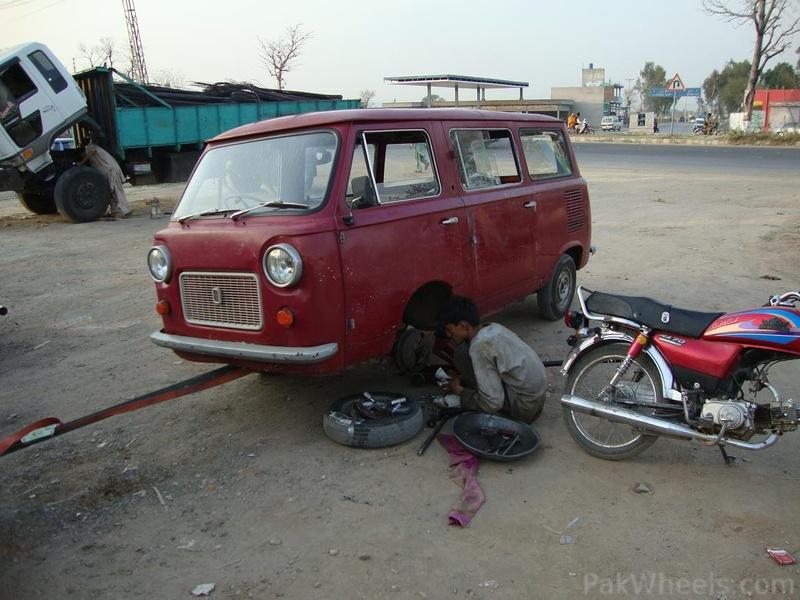
             Well, he didn’t.  About three hundred yards from the terminal the car gave one last, sickening rattle and the engine died.  Coasting to the terminal was out of the question since Mehrans have a top speed roughly equivalent to that of a sloth with a sprained ankle.  We came to a halt by the side of the road – a four lane road, with cars weaving in and out at high speed, I might add.  He jumped out and started to push.  I jumped out and started to help.  Jodie stayed in the car and started to pray.

             Pushing a car down a Pakistani highway is the kind of thing life insurance companies don’t cover you for.  If you read the list of exclusions it’s in there somewhere, between “training to be a lion tamer” and “flying metal-tipped kites during thunderstorms”.  Cars blared their horns as they swerved around us.  Buses screeched their brakes in anger as they narrowly avoided slamming into us.  And the driver and I plodded stolidly on.  We came to a junction where two more lanes of cars joined our road, meaning that even more cars were desperately trying to avoid hitting us.  It really was quite terrifying.

             And then it was over; we pushed the car to the side of the road, paid the driver, took our bags, and dashed to the bus station, only to find that instead of being five minutes late, as we had thought, we were actually forty-five minutes early, which gave us plenty of time to thank God for his protection and to vow never again to stop a taxi driver filling up with CNG.

Image

When you learn Urdu one of the things that will mess with your head is the word order.  It’s hard for a foreigner, especially an English-speaking one, to come to terms with it.  You have to forget the way that you’ve been taught to speak, to construct sentences, because in Urdu it just doesn’t work that way.  To give you an example, here is an English dialogue and its literal Urdu translation.

 – Good morning, how are you?

– I am fine thanks.  What is your name?

– My name is Imran.  Where are you going?

– I am going to the bazaar to buy bread.  After that I will go online to read the Sweaty Pilgrims blog.

– Ah yes, that is my favourite.  Such wonderful insight into Pakistani life!

– I find his treatment of Pakistani social customs to be most interesting.  Most foreigners have a bad impression of Pakistan.

– But then, dear brother, most foreigners form their opinions of Pakistan without having visited it.

– This is true.  The media has a most pernicious influence on the minds of Westerners.

 And in Urdu:

 – Peace, respectfully.  Your what condition is?

– I okay am.  Your name what is?

– My name Imran is.  You where going are?

– I bazaar going am, bread buy for.  This afterwards I internet on will go, Sweaty Pilgrims blog to read for.

– Ah yes, this my favourite is.  Such wonderful insight Pakistani life into!

– When Pakistani social customs about he writes, it very interesting is.  Almost all foreigners opinion is this, that Pakistani a bad country is.

– Yes, my brother, but most foreigners their own opinions Pakistan of make Pakistan to visit without.

– This true thing is.  Media’s influence Western minds on very bad is.

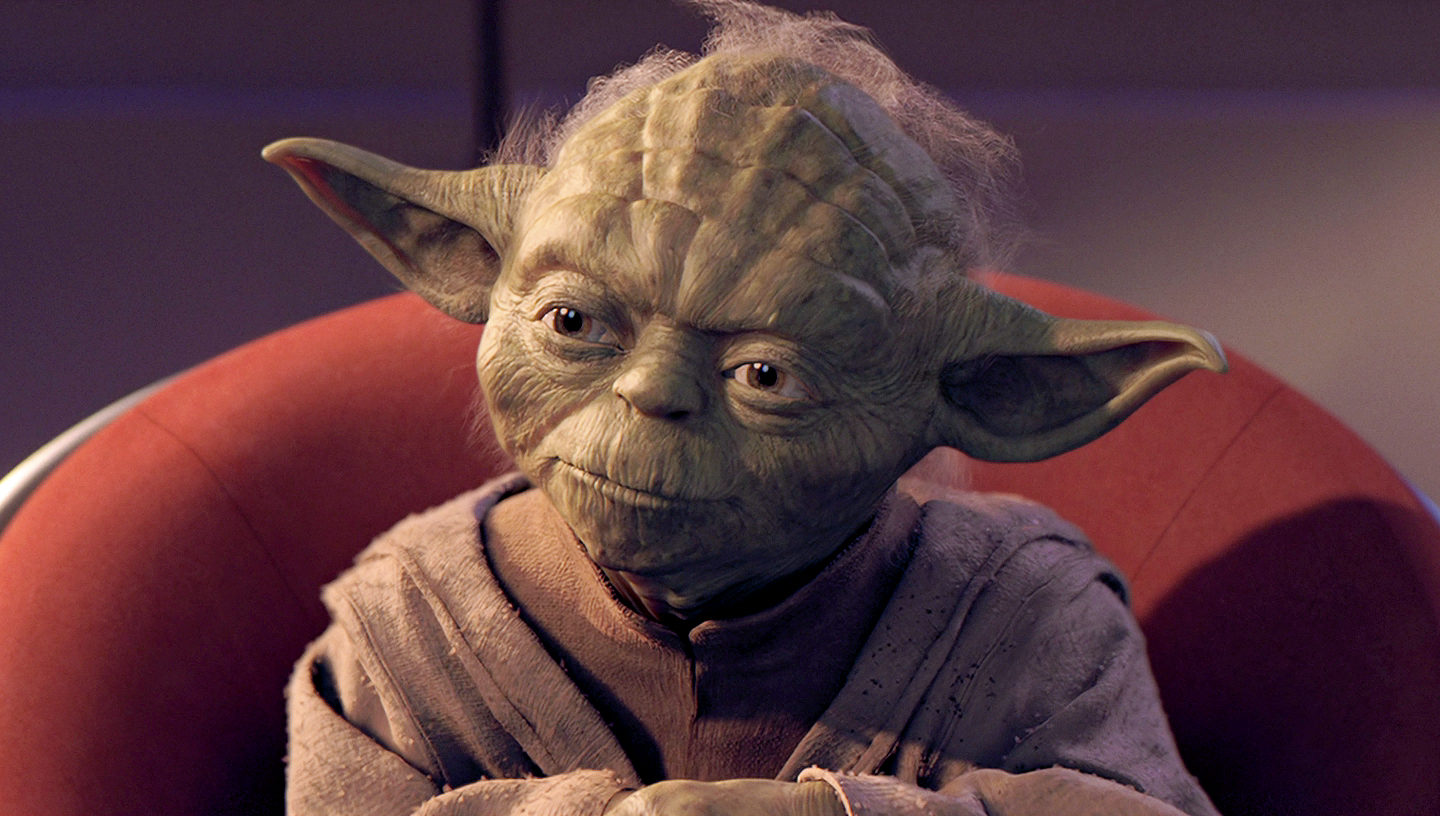
 And so on.  If you want to learn Urdu you have to make a mental shift.  No longer should you follow the rules of English grammar in an attempt to sound intellectual and correct; in order to fit in you need to accept that you’re going to end up sounding like Yoda, the little green wise man from Star Wars who is famed for saying things like “Powerful you have become, the dark side I sense in you” and “Patience you must have, young padawan”.

 Come to think of it, when you’re learning Urdu, “patience you must have” is pretty good advice too…

IMAG0389edit

Time passes quickly.  My daughter is nearly two already.  I spend a lot of time with my family, one of the biggest blessings of the kind of work I do, and I’ve seen every stage of her life at first hand.  The birth, the first few weeks, learning to roll over, to crawl, to walk, to laugh – I’ve seen it all as it happened and it has brought me and my wife a lot of joy.

She’s nearly two, and at the moment one of her favourite things is swinging on the swings.  Friends of ours have a set in their front garden and she’s taken to grabbing me by the hand and pulling me towards them.  “Dat one!” she squeals excitedly, “dat one!”, pointing to the swings and hopping up and down with joy.

Today I pushed her on the swings for twenty minutes.  Whenever I paused she would call anxiously to get me to continue.  “Poosh!”.  “POOOOOSH!”.

She’s nearly two already, and everyone tells me to treasure each day, that time passes so quickly, that she’ll be grown up before I know it.  It’s true, of course.  One day she’ll be grown up, may get married, may have children of her own.  I hope that when that day comes I’ll be able to look back and remember the little girl with blue eyes, swinging on the swings with such joy, her golden ringlets streaming in the breeze.

When people hear that we live in Pakistan they tend to take a deep breath and roll their eyes.

“That must be stressful” they often say.

They’re often right.  Everyday life in Pakistan, as in many other developing countries, features a pretty high level of stress.  More or less everything is more difficult than it is in the West.  Things that are done online in the West – paying bills, ordering groceries, changing car registrations – is done in person in Pakistan, which means a trip to the bank and a good half hour (minimum) of your time.  Then there’s the stress and expense of renewing visas (meaning that permission to stay in Pakistan is conditional on the whims of the government and can be withdrawn at any time), and the power cuts (sometimes for up to 20 hours), and the heat, and a permanent level of anxiety about security – especially since a group of foreign tourists were recently killed in the mountains north of here.

And then there’s the additional stress.  Recently, for example, we have faced:

– Our daughter being sent for a CT scan to check for suspected hydrocephalus (false alarm, thankfully).

– Our son catching a virus which gave him a high temperature, which meant that he couldn’t sleep and we had to stay awake fanning him with a piece of cardboard all night.

– My wife slipping on wet tiles and pulling several muscles, which incapacitated her for two days.

– Me sleeping awkwardly on my right arm which effectively paralysed it for a day.

– One 20hr power cut and another 15hr one, which meant no fans and no water to take showers as we couldn’t run the water pump, and…

– …temperatures topping 40 degrees Celsius.

I write this not in an attempt to gain any kind of kudos or respect for the things we have to put up with.  I write this because there may be people who are thinking of coming to Pakistan to work for an NGO and I’d like them to know in advance some of the things they might have to deal with…

When I sit in front of my laptop I feel like a character from Star Trek.  Within this small device, with its tiny green LED signifying an active internet connection, the entirety of human knowledge is at my fingertips.  In the same way that characters from sci-fi TV programmes used to do, with just a few key presses I can bring up more or less any kind of information imaginable.

I can read about Byzantine naval tactics, the history of Wolverhampton Wanderers football team, the current weather in Santiago or Kuala Lumpur.  The internet will inform me of the current price of a barrel of North Sea oil, of any projected delays to Air Canada flight 868 from Toronto to London, of the precise distance from Earth to Venus.  I can, if I so choose, learn the motto of Aitchison College Lahore, the diameter in millimetres of a Major League baseball, the precise altitude of the city of Ulan Baator, Mongolia.  I can do anything.  Anything.  The whole of human knowledge, the sum total of thousands and thousands of years of studying, learning, pondering, living, playing, exploring, measuring, developing, advancing – it’s all here.  All of it.  A fact which, in times past, would have taken the chief scientists of the day months of study, can be mine within a few seconds.  Even thirty years ago someone would have had to find a book and look it up, but even that minor inconvenience is spared me thanks to the internet, and Wikipedia.  The kind of technology that sci-fi writers would have dreamed of is here and in our hands, even, thanks to smartphones, in our pockets.

So why, when I sit in front of my laptop, invariably ignore this vast accumulated wealth of knowledge and wisdom and revert to looking at Facebook and watching funny videos of babies dancing?

I’m lazy, is the honest answer.  For shame, for shame…

I’ve had enough of hearing about the Boston marathon bombings.  Not because they weren’t terrible – they were.  Not because I don’t have sympathy for those killed and injured, and their families – I do.  My reason for being thoroughly fed up with the incessant stream of updates is that they seem to indicate that some human lives are worth less than others.

 Three people were killed in Boston on April 15th and many more injured, some of them seriously.  That’s horrible, but I want to put this in some kind of global perspective.  The day afterwards, April 16th, some 42 people were killed and 257 more injured in a series of bombings in Iraq.  In Syria scores of people, including women and children, are dying by the day.  In Pakistan only yesterday eight people were killed in in a string of attacks.  These events made the news – but only just.  They attracted barely a fraction of the attention that was lavished on the city of Boston which suffered far fewer casualties.

 The fact that the Boston bombings were out of the ordinary was a factor, of course.  Terrorist attacks on mainland USA are rare, whereas bombings in many parts of the world, including Iraq, Syria and Pakistan, are depressingly commonplace.  But even so, the disparity in coverage concerns and depresses me.  It’s hard to escape the notion that the value of a human life varies from country to country.  It reminds me of the dark joke which came out of the 2005 Indian Ocean tsunami, when people protested the disparity in media coverage by saying “3 Americans killed in tsunami”, implying that the other 230,000 of different nationalities didn’t matter so much.

 It’s probably naïve of me to hope that one day people might care as much about a street kid in Karachi or Kenya as they do about marathon runners in Boston, but I refuse to submit to the unspoken understanding that the life of one is worth more or less than that of another.  The whole world is worthy of our attention, not just the areas in which English is spoken, iPads are purchased, and people drink Starbucks.

Image

“Of course, the thing I most object to in their religion is the violence of it” said one man to the other.  “It seems that they are unable to express their religious views without killing people who disagree with them.”

 “I agree” said the second man to the first, stroking his beard pensively.  “Their track record of combining their faith with military power speaks for itself.  They claim that theirs is a religion of peace and yet we see them attacking others, declaring war, and invading foreign countries in the name of their God”.

 “Not to mention persecuting people of their own faith whose interpretation of their scriptures differs from their own!” added the first man angrily.

 Both men paused to reflect.

 “And then there’s the fact that they always break their word.  They make treaties with their enemies and then break them.  Always have done, always will.  Can’t trust anyone from that religion, history proves that quite well” snorted the second man.

 “And don’t even get me started on their contempt for science and progress” said the first man, stabbing the air with an enraged finger to emphasise his point.  “The way they persecuted scientists and constantly stand in the way of progress and development.  Some of the poorest countries in the world are based on their religion”.

 “Too true, too true” confirmed the second man sadly.

 “Listen to that, the sound of their religious building calling the faithful to prayer” said the first man.

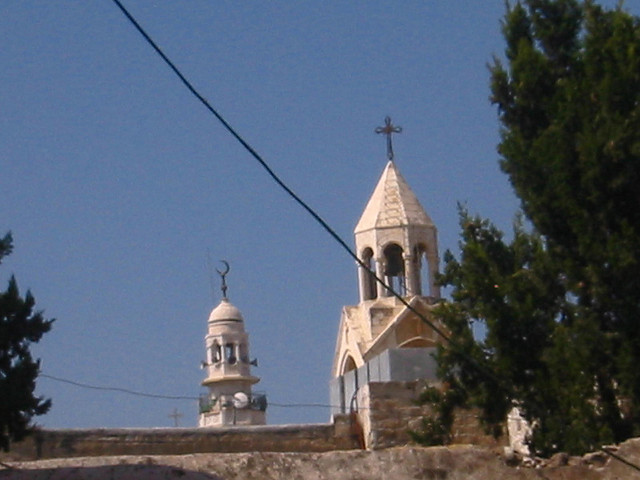
 Both men stopped to listen to the noise of the church bells tolling.  The sound, mournful and plangent, echoed from the top of the church tower.  They listened sadly, then sat in thoughtful silence as the sound of Christian worship throbbed from the church.

 “The thing is, though” said the first man quietly, “I can’t stop thinking about that Jesus of theirs.”

 Another pause, then:

 “If only they behaved more like him”.

Design a site like this with WordPress.com
Get started