Archive

Pakistan

It is emotionally difficult to live in Pakistan.  The three years we have spent here have been characterised by emotional turbulence more than anything else. 

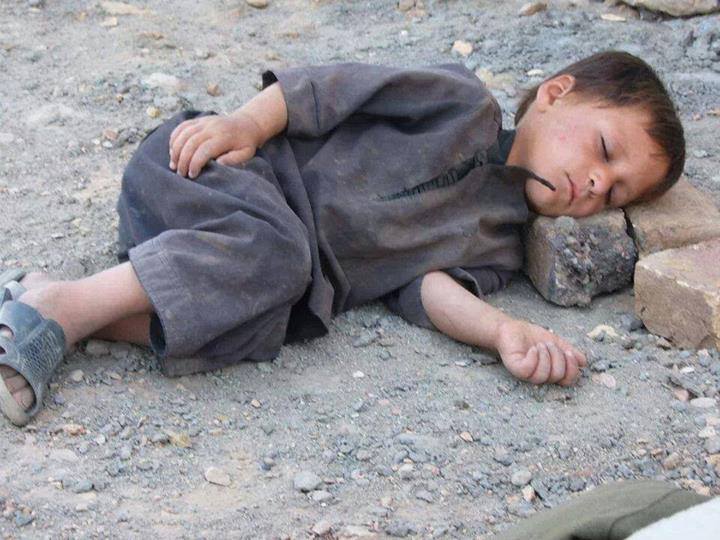
There are many reasons for this.  Firstly, because life anywhere in the developing world is difficult.  Westerners like me have grown accustomed to having it easy: good healthcare, reliable electricity, smooth roads, trustworthy police.  Life in the developing world is less easy.  We have power cuts all the time.  The roads are often pitted and broken.  People die for reasons that would be unthinkable in the West: malnutrition, cholera, medical incompetence.  People in the West take comfort for granted, seeing it almost as a birthright, and the thought of life being uncomfortable or difficult is foreign.  Over here, for many people, life is a constant struggle, a trail of sweat and labour and sorrow and danger and uncertainty.  Many people do not know where the next day’s food is coming from.   Can you imagine looking into the faces of your children and not being able to assure them that there will be breakfast in the morning?
1458575_690494047636482_1654577906_n

It breaks my heart every single day to see people struggling with everyday life.  In the Bible Jesus wrote that “I have come that people may have life, and have it in all its abundance”.  And yet even now, two thousand years after Jesus walked the earth, billions of people, perhaps the majority of people on the planet, spend their years in difficulty and pain.  There must be more to life than this.

My heart breaks every time a thin-faced beggar knocks on the car window asking for money, every time I see a grandmother toiling down the road with a load of firewood piled on her back, every time I see children as young as 4 or 5 sifting through piles of stinking garbage to find bottles or rags that they might be able to sell for a few rupees.  God did not create people so that they might spend their days in such rancid poverty.  There must be more to life than this.  There must be a way to bring wholeness to Pakistan.

IMG_20140907_171023965 (2)

Bougainvillea plants are found everywhere in Pakistan.  They grow prolifically, clambering up walls and hedges like enthusiastic children, their green shoots reaching upwards and eventually exploding in a cascade of paper-thin flowers.  In the midst of the dust and grime of Pakistani streets their exuberant colours come as a relief, a reminder of freshness and vitality in otherwise drab places.

This one is doing its best to climb across a roll of barbed wire.  The juxtaposition of the beauty of the flower and the harsh reminder of the lawlessness of Pakistan struck me as I walked around our house, reminding me that beauty is possible even in the middle of difficulty.

IMG_20140905_153815408

The monsoon arrived late this year.  Since we landed in Pakistan it rained continuously for three whole days.  Being English, I am used to above-average levels of precipitation – in fact I quite like it, and usually prefer it to hot, sunny weather – but three days of rain without a single break was a bit much, even for me.

It was certainly “a bit much” for Pakistan.  The north of the country is mountainous, and local drainage systems are unable to cope with the amount of rain that fell in the last few days.  Drains overflowed, rivers swelled, and all of that water, millions and millions of gallons of it, rushed downhill.  The result was predictable: widespread flooding across the north of the country.  As of this morning over 100 people have been killed and thousands more made homeless.  In some areas entire streets are underwater, entire neighbourhoods swamped by the foaming torrent.

As always, it is the poor that suffer the most.  The areas in which they can afford to live are those most susceptible to flooding – the land there is cheap for a reason! – and so they are washed out of their homes, their livelihoods disappearing downstream.

This is a turbulent land.  

IMG_20140901_093150498

So after 2 months in the UK, 3 months in Canada, a lengthy pause in my blogging efforts, and several long-haul flights with children, we are back in Pakistan.  I had forgotten how dusty, humid, and interesting it is over here, and just how warm and kind the people are.

We have arrived at a time of political tension, with large protests in the capital and ongoing fighting in the tribal areas between the army and militants, but despite the difficulties it is genuinely wonderful to be back in our own home, driving our own car, in a country we have come to love.

I might even blog more regularly…after all, Pakistan is a remarkably interesting place, sometimes for the right reasons…

Our third child, and second daughter, was born recently.  This leads me to make two observations: firstly, that three children are a LOT more work than two, and secondly, that life is unfair.

 I’ll explain.  A Pakistani friend of ours also had his third child recently.  Like us he had a boy, then a girl, and now another girl.  Like us he loves his children very much.  Like us he and his wife are devoted parents.  Like us they are delighted to have three healthy children.  But there the similarities end and the differences begin.

 Our kids have Western passports – two each, actually, since they have dual nationality.  For both of those countries the life expectancy is over 80 years.  The literacy rate is effectively 100%.  If we had to return to either of our home countries our kids would benefit from high-quality healthcare at a low cost.  Both of our home governments score highly on transparency ratings, since Western countries have largely eliminated corruption.  If we got into trouble our foreign offices would, in all probability, get us out of it.  While it’s impossible to say that our children will have trouble-free lives, their passports give them a ticket to a life of significant privilege.  They are probably among the most privileged children in the world.

 And our friends’ kids?  Pakistani life expectancy is 65 years, its literacy rate 57%.  Quality healthcare is available here, at a cost.  If you can’t pay for it, you can’t have it.  The average salary is around $3,000 a year, less than a tenth of that in the Western countries whose passports my children possess.  We went to visit our friend recently.  His new daughter, a month older than ours, weighs less now than our daughter did at birth, and she’s growing a lot more slowly.  This is partly due to the fact that she is being fed cow’s milk, since that is what the doctor recommended.  A better doctor would not recommend cow’s milk, but they can’t afford a better doctor, so their daughter’s development is suffering.

 So, to summarise, our daughters were born within a month of each other.  One is statistically likely to live 20% longer, be healthier, earn ten times more money, and is twice as likely to receive an education.

 May God have mercy on a world in which, even at birth, the paths of childrens’ lives are so unjustly laid out.

Image

A while ago it became necessary, for various reasons, to make a trip to a town some hours to the north of Rawalpindi.  As this was before we purchased a car we had to make the trip by bus.  You might think that would be a hardship, public transport being generally regarded as less preferable to private, but Pakistan is blessed with the Daewoo bus company.  This company – Korean, I think – has brand-new, air-conditioned buses which run to time, which have TVs, and whose staff even go to the trouble of handing out free snacks and cold drinks during the journey.  It’s an excellent way to travel.

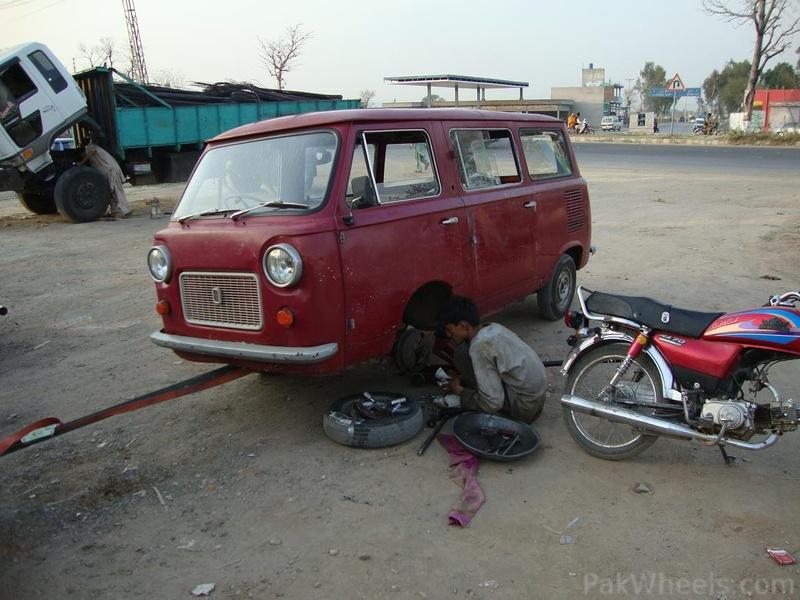
             Anyway, I digress.  We hopped in a taxi and started to make our way to the Daewoo terminal.  It was a spectacularly bad choice of vehicle: run-down, clunky, and in remarkably bad condition, even by Pakistani standards.  The rear windscreen was a piece of clingfilm.  It rattled and banged like a loose door in a strong wind.  The driver was intent on stopping to fill up with CNG (compressed natural gas, the same LPG that some people use in the UK).  We insisted that we were in a hurry, so he grudgingly agreed to get us there and fill up afterwards.

 “Do you have enough gas to get us there?” we asked, more than a little anxiously.

 “Oh yes, no problem.  Don’t worry” he assured us.

             Well, he didn’t.  About three hundred yards from the terminal the car gave one last, sickening rattle and the engine died.  Coasting to the terminal was out of the question since Mehrans have a top speed roughly equivalent to that of a sloth with a sprained ankle.  We came to a halt by the side of the road – a four lane road, with cars weaving in and out at high speed, I might add.  He jumped out and started to push.  I jumped out and started to help.  Jodie stayed in the car and started to pray.

             Pushing a car down a Pakistani highway is the kind of thing life insurance companies don’t cover you for.  If you read the list of exclusions it’s in there somewhere, between “training to be a lion tamer” and “flying metal-tipped kites during thunderstorms”.  Cars blared their horns as they swerved around us.  Buses screeched their brakes in anger as they narrowly avoided slamming into us.  And the driver and I plodded stolidly on.  We came to a junction where two more lanes of cars joined our road, meaning that even more cars were desperately trying to avoid hitting us.  It really was quite terrifying.

             And then it was over; we pushed the car to the side of the road, paid the driver, took our bags, and dashed to the bus station, only to find that instead of being five minutes late, as we had thought, we were actually forty-five minutes early, which gave us plenty of time to thank God for his protection and to vow never again to stop a taxi driver filling up with CNG.

Image

When you learn Urdu one of the things that will mess with your head is the word order.  It’s hard for a foreigner, especially an English-speaking one, to come to terms with it.  You have to forget the way that you’ve been taught to speak, to construct sentences, because in Urdu it just doesn’t work that way.  To give you an example, here is an English dialogue and its literal Urdu translation.

 – Good morning, how are you?

– I am fine thanks.  What is your name?

– My name is Imran.  Where are you going?

– I am going to the bazaar to buy bread.  After that I will go online to read the Sweaty Pilgrims blog.

– Ah yes, that is my favourite.  Such wonderful insight into Pakistani life!

– I find his treatment of Pakistani social customs to be most interesting.  Most foreigners have a bad impression of Pakistan.

– But then, dear brother, most foreigners form their opinions of Pakistan without having visited it.

– This is true.  The media has a most pernicious influence on the minds of Westerners.

 And in Urdu:

 – Peace, respectfully.  Your what condition is?

– I okay am.  Your name what is?

– My name Imran is.  You where going are?

– I bazaar going am, bread buy for.  This afterwards I internet on will go, Sweaty Pilgrims blog to read for.

– Ah yes, this my favourite is.  Such wonderful insight Pakistani life into!

– When Pakistani social customs about he writes, it very interesting is.  Almost all foreigners opinion is this, that Pakistani a bad country is.

– Yes, my brother, but most foreigners their own opinions Pakistan of make Pakistan to visit without.

– This true thing is.  Media’s influence Western minds on very bad is.

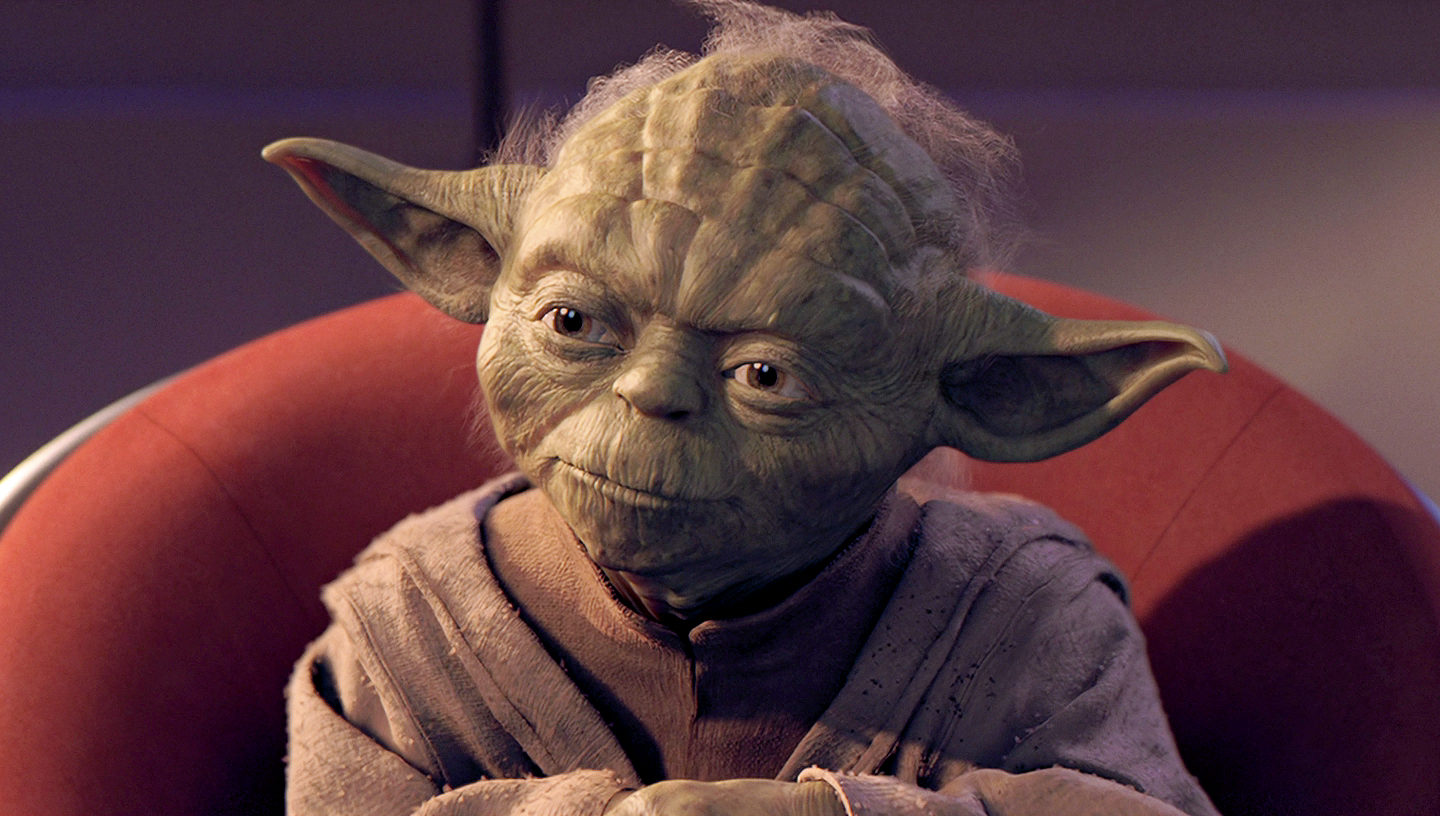
 And so on.  If you want to learn Urdu you have to make a mental shift.  No longer should you follow the rules of English grammar in an attempt to sound intellectual and correct; in order to fit in you need to accept that you’re going to end up sounding like Yoda, the little green wise man from Star Wars who is famed for saying things like “Powerful you have become, the dark side I sense in you” and “Patience you must have, young padawan”.

 Come to think of it, when you’re learning Urdu, “patience you must have” is pretty good advice too…

IMAG0389edit

Time passes quickly.  My daughter is nearly two already.  I spend a lot of time with my family, one of the biggest blessings of the kind of work I do, and I’ve seen every stage of her life at first hand.  The birth, the first few weeks, learning to roll over, to crawl, to walk, to laugh – I’ve seen it all as it happened and it has brought me and my wife a lot of joy.

She’s nearly two, and at the moment one of her favourite things is swinging on the swings.  Friends of ours have a set in their front garden and she’s taken to grabbing me by the hand and pulling me towards them.  “Dat one!” she squeals excitedly, “dat one!”, pointing to the swings and hopping up and down with joy.

Today I pushed her on the swings for twenty minutes.  Whenever I paused she would call anxiously to get me to continue.  “Poosh!”.  “POOOOOSH!”.

She’s nearly two already, and everyone tells me to treasure each day, that time passes so quickly, that she’ll be grown up before I know it.  It’s true, of course.  One day she’ll be grown up, may get married, may have children of her own.  I hope that when that day comes I’ll be able to look back and remember the little girl with blue eyes, swinging on the swings with such joy, her golden ringlets streaming in the breeze.

When people hear that we live in Pakistan they tend to take a deep breath and roll their eyes.

“That must be stressful” they often say.

They’re often right.  Everyday life in Pakistan, as in many other developing countries, features a pretty high level of stress.  More or less everything is more difficult than it is in the West.  Things that are done online in the West – paying bills, ordering groceries, changing car registrations – is done in person in Pakistan, which means a trip to the bank and a good half hour (minimum) of your time.  Then there’s the stress and expense of renewing visas (meaning that permission to stay in Pakistan is conditional on the whims of the government and can be withdrawn at any time), and the power cuts (sometimes for up to 20 hours), and the heat, and a permanent level of anxiety about security – especially since a group of foreign tourists were recently killed in the mountains north of here.

And then there’s the additional stress.  Recently, for example, we have faced:

– Our daughter being sent for a CT scan to check for suspected hydrocephalus (false alarm, thankfully).

– Our son catching a virus which gave him a high temperature, which meant that he couldn’t sleep and we had to stay awake fanning him with a piece of cardboard all night.

– My wife slipping on wet tiles and pulling several muscles, which incapacitated her for two days.

– Me sleeping awkwardly on my right arm which effectively paralysed it for a day.

– One 20hr power cut and another 15hr one, which meant no fans and no water to take showers as we couldn’t run the water pump, and…

– …temperatures topping 40 degrees Celsius.

I write this not in an attempt to gain any kind of kudos or respect for the things we have to put up with.  I write this because there may be people who are thinking of coming to Pakistan to work for an NGO and I’d like them to know in advance some of the things they might have to deal with…

I was driving through Islamabad recently when a traffic policeman pulled me over.  As a moderately  conscientious motorist who has never received a ticket or fine nor been in any kind of significant accident my brushes with traffic policemen are infrequent.  In fact in Pakistan the only reason I ever have to speak with one is either because they are bored and want someone to chat to, or, as happened to me recently, they want to borrow a pencil.

I didn’t have one.  He seemed confused.

“If you don’t have a pencil, how do you write?” he asked.

I attempted to respond that although I liked writing I tended to do so with a computer, and, either way, that I tended not to do any kind of writing while driving, but he laughed and waved me on.

Anyway, on this particular day the policeman seemed moderately irate.  This is odd, because in my experience Pakistani traffic policemen are courtesy itself.  I greeted him and asked him what the matter was.

“You were talking on your phone” he said.  This was undeniable.  A friend had called about a meeting later in the day and I had answered.  Though illegal in the West I had no idea that such a thing was also illegal in Pakistan.

I told him that I was terribly sorry and that I had no idea such a law existed.  He flipped to the appropriate page in his book of fines and showed me the small print.  There it was – “talking on mobile, 300 rupee fine”.  Bang to rights.  Caught red handed.  Busted.

“I’m so sorry, sir” I replied.  “You’re quite right.  I ask for your forgiveness”.

He seemed dumbstruck.  He scratched his head in confusion.

“You know I have to give you a ticket, right?” he said.

“Of course, you are quite right.  It is your job.  I am sorry to have caused you such bother”.

He didn’t know what to do.  People in Pakistan generally argue in this kind of situation.  Minor infractions lead to major disagreements, with lots of gesticulating, shouting, and usually bystanders getting involved for no apparent reason other than their love of a good show.  Nobody ever apologises, and certainly nobody ever asks for forgiveness.

Nobody.  Ever.

“Ok, next time” he said, with a confused face and perhaps the hint of a smile.  “Don’t do it again”.

Design a site like this with WordPress.com
Get started